Startup Product / Shipped product proof
TruWorld
A mobile product designed to turn digital curiosity into real-world exploration and local-business visits.
How a two-sided product thesis connected consumer exploration with intended value for local partners.
- 0→1 product thesis
- Two-sided journey design
- Beta learning system
- GTM as product
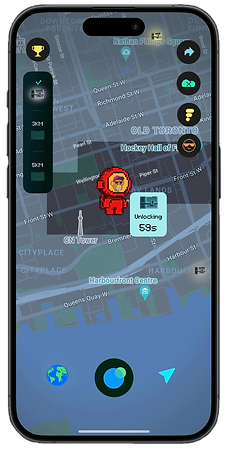
A historical public mobile screen from the shipped location-aware exploration product; not presented as current live-product state.
- 0→1
- Public mobile MVP
- 45K+
- Community
- 30+
- Retail partnerships
- ~$500K
- Completed strategic investment
Approved public figures. Definitions, attribution limits, and unresolved measurement details are stated later in the case.
Evidence first
What is proven, what I changed, and what remains open.
A 90-second evidence map for hiring review. Synthetic product views explain mechanics; they never count as outcome proof.
- Verified now
- A shipped public mobile product, historical product screens, a 45K+ community, 30+ retail partnerships, and approximately $500K in completed strategic investment.
- Next evidence gate
- A tighter evidence chain from consumer and partner discovery to the shipped loop, retention, visits, and monetization.
User / workflow evidence
Supported synthesisHistorical consumer and local-business journey work informed a location-based loop combining exploration, discovery, rewards, and partner engagement. The exact research method and sample are not yet documented publicly.
Product decision
Verified recordI treated physical action, not screen time, as the product outcome and connected the consumer discovery loop with partner participation, community, and commercialization.
Product / system judgment
Supported synthesisLocation context, gamified exploration, rewards, and partner destinations were composed into one public experience; historical screens show the real product rather than a synthetic replacement.
Evaluation → change
Open evidence gapExperiment, retention, visit-conversion, and campaign-learning records have not yet been connected to the public case, so the page does not invent a product-iteration result.
Outcome / boundary
Verified recordThe product, community, partnerships, investment, and shared founder-team scope are approved claims. Community is not relabelled as active users, partnerships as simultaneous campaigns, or investment as revenue.
AI product decision record
The choices behind the product, architecture, and release gate.
Do not retrofit generative AI into a shipped location product when geospatial relevance, incentives, and marketplace liquidity drive value.
AI fit
Supported synthesisKeep the shipped core centered on location, discovery, rewards, and partner participation; treat AI personalization as optional future leverage.
The product outcome is a real-world action, and the primary risks are relevance, supply, incentive design, and repeat use.
Alternative consideredA conversational AI layer would add novelty without solving destination quality or marketplace liquidity.
Knowledge & context
Supported synthesisUse structured geospatial, campaign, reward, and partner records rather than RAG for the core experience.
The user needs ranked, time- and place-aware options with reliable eligibility, not generated factual prose.
Alternative consideredA vector knowledge base is the wrong primitive for location availability and reward state.
System architecture
Supported synthesisUse product APIs and marketplace records; do not introduce agents or MCP without a real cross-system user job.
The shipped loop benefits from predictable interactions, low latency, and measurable funnels.
Alternative consideredAgentic complexity would make a consumer action loop slower and harder to instrument.
Evaluation & release
Open evidence gapThe correct eval is the consumer and partner funnel: discovery relevance, activation, real-world action, retention, and partner value.
The public record currently proves scale inputs but not how experiments changed the core loop.
Alternative consideredCommunity size alone cannot substitute for active use, retention, visits, or monetization evidence.
Evidence I still need from the private project record3 open items
- 01
Core-loop user-research method and the product changes it caused.
- 02
Active-user, retention, visit, campaign, or monetization definitions.
- 03
How the consumer product and partner advertising proposition connected in the shipped experience.
Zero-context product contract
What this product did, for whom, and why it mattered.
Historical end-to-end journey reconstructed from the shipped product screen and approved consumer, partner, and prototype artifacts. It is not presented as current live-product state.
- Primary user
- Explorers looking for a reason to discover nearby places, and local partners seeking participation beyond a digital impression.
- Trigger
- An explorer wants a meaningful nearby activity, or a partner wants to bring people into a location-based campaign.
- Product action
- Connect map-based discovery, a nearby challenge, physical participation, progress, and a partner moment in one loop.
- Output
- An intended real-world activity for the explorer and a participation moment designed to create value for the local partner.
- Decision enabled
- Which place or challenge to pursue next, and which partner activation should be adjusted or repeated.
Product mechanics
See the product work before reading the retrospective.
The walkthrough uses fictional records to make the interaction and decision flow tangible. It does not replace the approved historical evidence or imply that every reconstructed state was shipped exactly as shown.
Maya explores a fictional neighbourhood mission and a local partner reviews the resulting visit signal.
Turn a neighbourhood into a mission
The product presents a small set of place-based actions instead of an endless feed.
- User action
- Accept the route or replace one stop before beginning.
Mission
Harbour Loop · 3 stops · 2.8 km · food, design, and public art
Inputs to product direction
What the available record supports.
Verified facts, historical artifacts, and public-safe reconstruction are kept distinct. Each item states the product implication without turning a plausible inference into a confirmed result.
Discovery alone did not create enough motivation to leave the screen and explore a place.
Product implicationMake movement, place discovery, and progress part of one visible loop.
Local businesses needed a clearer bridge between digital promotion and an in-person visit.
Product implicationDesign partner value around a real-world action rather than an impression.
Moving from a two-sided thesis to a public product required product, marketing, operations, community, and partner work to move together.
Product implicationTreat launch and commercialization as part of the founder-level product system.
Journey transformation
Location-based exploration, rewards, and local business discovery
Historical end-to-end journey reconstructed from the shipped product screen and approved consumer, partner, and prototype artifacts. It is not presented as current live-product state.
- 01
Explore
- User goal
- Find somewhere worth going.
- Original friction
- Digital discovery is passive and interchangeable.
- Product response
- A location-aware map makes the physical world the interface.
- Success signal
- A user begins an exploration path.
- 02
Choose
- User goal
- Know what to do next.
- Original friction
- Places lack a compelling reason to act now.
- Product response
- Missions and venue context turn a place into a purposeful activity.
- Success signal
- A user selects a place or mission.
- 03
Visit
- User goal
- Reach and experience the location.
- Original friction
- Most product engagement ends before physical action.
- Product response
- Progress depends on real-world exploration.
- Success signal
- Digital intent becomes a physical visit.
- 04
Participate
- User goal
- Complete a meaningful action.
- Original friction
- Promotions rarely feel connected to the experience.
- Product response
- Partner moments are embedded in the exploration loop.
- Success signal
- A user completes the intended activity.
- 05
Return
- User goal
- See progress and discover more.
- Original friction
- One-off discovery has little reason for repetition.
- Product response
- Rewards and progression create continuity across visits.
- Success signal
- A user resumes exploration.
Product decision and rationale
What should count as meaningful product engagement?
This is an evidence-backed reconstruction of the product logic. It is not presented as a verbatim or dated decision record.
- Consumers needed a reason to move from discovery to action.
- Partners needed a clearer connection between promotion and physical participation.
- The product thesis was built around real-world exploration.
Define the physical visit as the core outcome and design the map, missions, place discovery, and rewards around it.
This made the MVP more operationally demanding than a conventional content or promotion app.
Product experience, partner supply, community, and GTM had to be designed as one system.
- Location-aware exploration map
- Place and mission discovery
- Progress and rewards
- Partner-led real-world moments
- Broader social world-building
- Advanced personalization
- Larger ecosystem features
The core loop had to make a physical action understandable, usable, and repeatable before the ecosystem expanded.
Product and working evidence
The artifacts behind the claim.
Historical public screens and working artifacts are labeled separately. Their presence proves the artifact exists; it does not automatically prove research method, product state, or causal impact.
The world is the interface
A historical public mobile screen from the shipped location-aware exploration product; not presented as current live-product state.
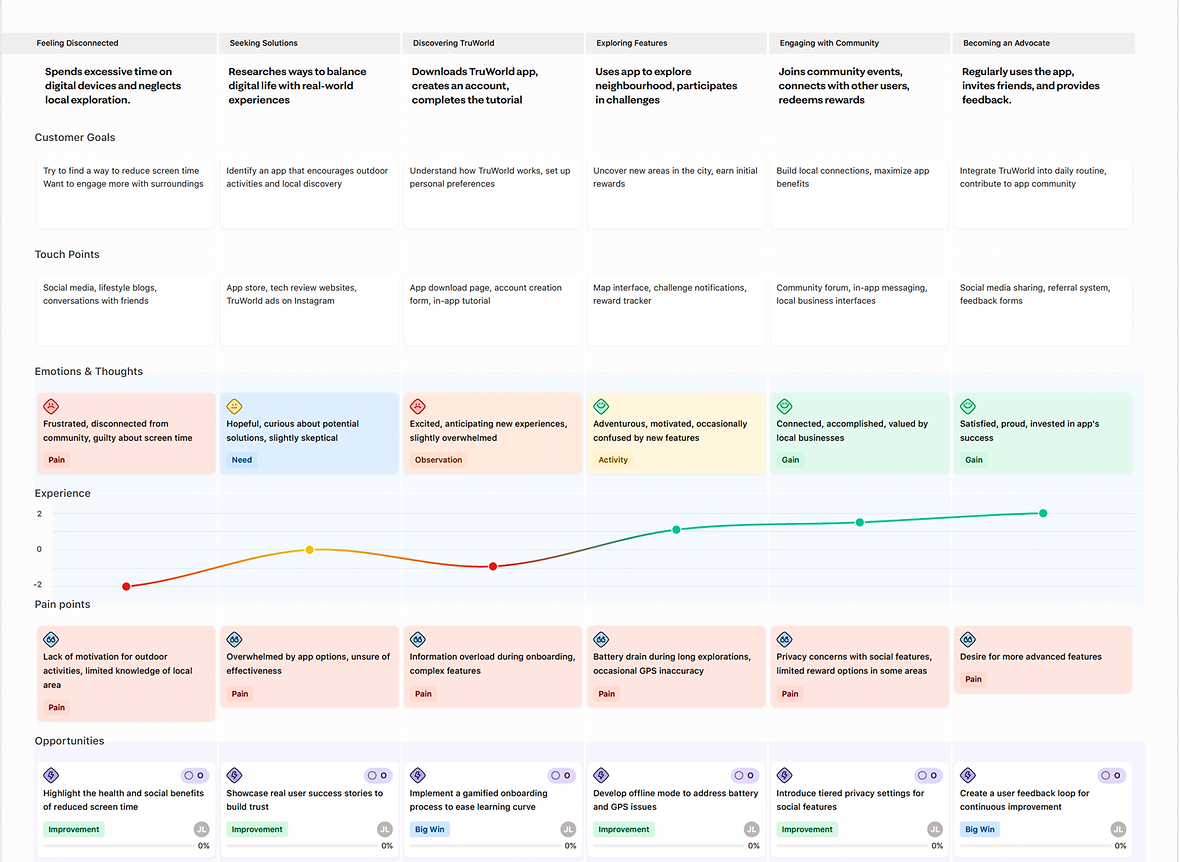
Consumer journey evidence
Historical consumer-journey artifact. Its research method, date, and sample are not yet established in the public evidence record.
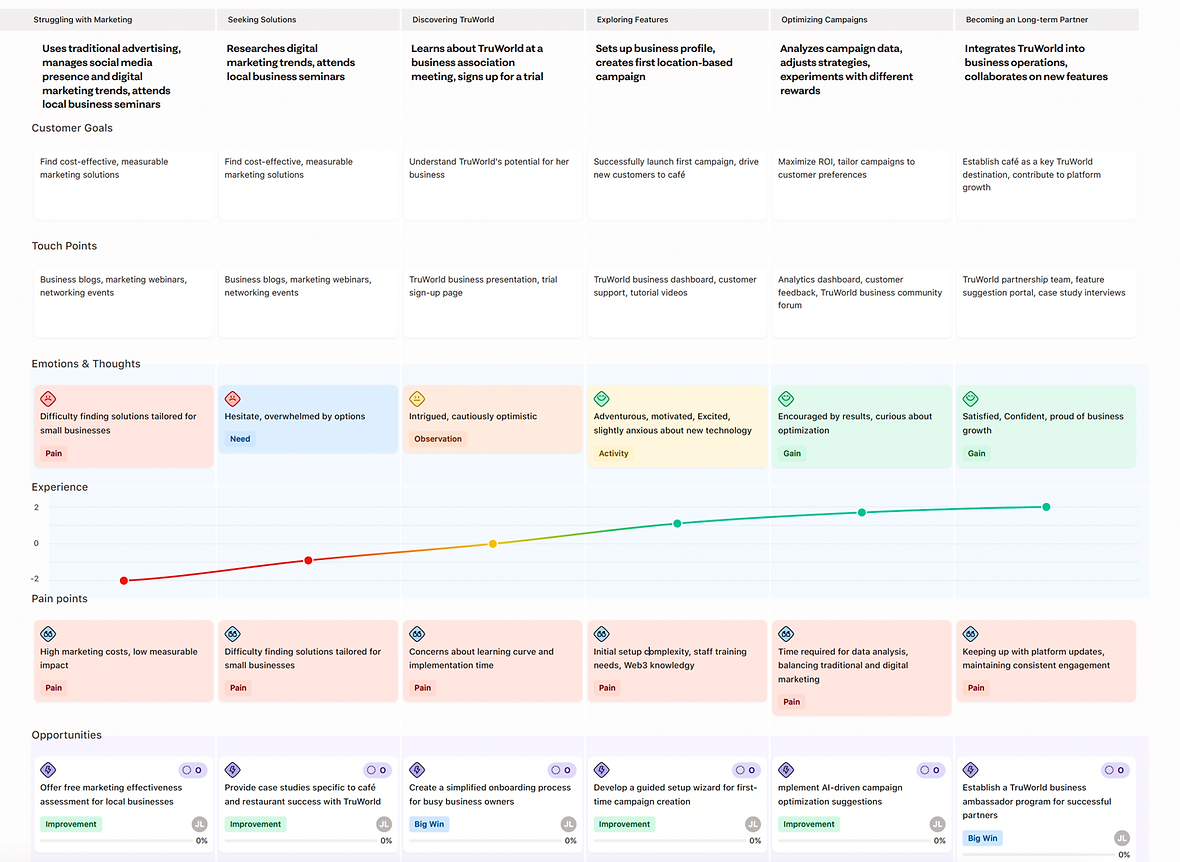
Partner journey evidence
Historical partner-journey artifact. Its research method, date, and sample are not yet established in the public evidence record.
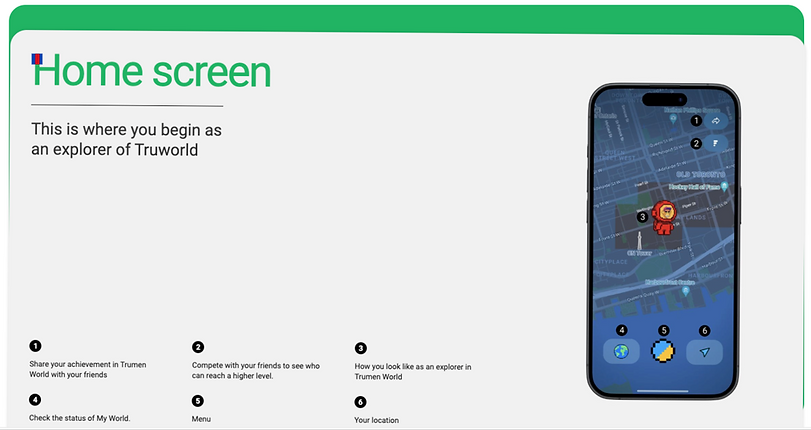
From thesis to interface
Historical prototype artifact connecting the product thesis to the mobile experience.
Delivery and adoption
The work around the product is part of the product.
Shipped public MVP alongside community building and partner development within shared founder leadership.
- Product
- Engineering and design
- Marketing
- Operations
- Retail partners
- 01
Led shared founder decisions across product, marketing, and operations.
- 02
Connected historical consumer and partner journey work to the product thesis and launch path.
- 03
Connected partner acquisition and community growth to the product experience.
Product direction and program evidence
Place the product direction beside the approved evidence.
Adjacent evidence does not imply that one feature caused the full result. The approved metric language and attribution boundaries remain visible.
- 01Product direction
Location-aware exploration loop
Observed or intended operating shiftCreated a public product path from digital discovery to physical participation.
Approved program evidenceVerified shipped outcome: zero-to-one public mobile MVP.
- 02Product direction
Partner moments inside the experience
Observed or intended operating shiftMade local businesses part of the product supply and user journey.
Approved program evidenceVerified program evidence: 30+ retail partnerships; causal attribution is not established publicly.
- 03Product direction
Community and commercialization system
Observed or intended operating shiftBuilt market visibility and external confidence around the product.
Approved program evidenceVerified program evidence: 45K+ community and approximately $500K in completed strategic investment; sole causation is not claimed.
I led product, marketing, and operations within shared founder leadership, connecting journey design, beta learning, partner supply, community, GTM, and commercialization.
Evidence boundary
What the case proves, and what it does not.
Community is not relabeled as active users; partnerships are not relabeled as simultaneous campaigns; investment is not revenue or valuation.
- Shipped public mobile product and historical consumer, partner, and prototype artifacts.
- 45K+ community and 30+ retail partnerships.
- Approximately $500K in completed strategic investment; Desheng helped secure it within shared founder leadership.
- Active-user, retention, campaign-conversion, and monetization definitions.
- How the location-exploration product and separately documented AI advertising proposition related in the shipped experience.